
Step-by-Step Instructions for Pricing Optimization: A Strategic Framework | Price Strategist
Discover a comprehensive, data-driven approach to pricing optimization for B2B technology and services companies, maximizing revenue and competitive positioning.
Step-by-Step Instructions for Pricing Optimization: A Strategic Framework
This comprehensive guide delivers step-by-step instructions to transform your pricing strategy from guesswork to a precise, data-driven approach. We'll walk you through a strategic framework that helps you identify hidden revenue opportunities, align pricing with market dynamics, and ultimately drive sustainable competitive advantage.
Whether you're struggling with margin compression, market uncertainty, or simply want to elevate your pricing intelligence, this roadmap provides actionable insights tailored to B2B technology and services environments. By implementing these systematic optimization techniques, you'll not only protect your bottom line but position your organization to outmaneuver competitors and capture maximum market value.
Why Systematic Pricing Optimization Demands a Structured Approach
Pricing strategy isn't a static decision but a dynamic process requiring continuous refinement and strategic intelligence. B2B technology and services companies face increasingly complex market conditions that demand more sophisticated pricing mechanisms beyond traditional cost-plus or competitive benchmarking models.
Business Context: The Pricing Intelligence Imperative
Modern revenue executives recognize pricing as a critical lever for financial performance. Research consistently demonstrates that a 1% improvement in pricing can generate up to 11% increase in overall profitability-significantly more impactful than similar improvements in cost reduction or volume growth.
- Pricing directly influences revenue generation and profit margins
- Market volatility requires adaptive pricing strategies
- Customer perception and value perception are intricately linked to pricing
Persistent Pricing Optimization Challenges
Despite understanding pricing's strategic importance, most organizations struggle with fundamental optimization barriers:
Data Fragmentation
Disconnected systems and siloed information prevent holistic pricing analysis, leading to suboptimal decision-making.
Limited Analytical Capabilities
Many teams lack advanced analytical tools and methodologies to conduct comprehensive pricing assessments.
Competitive Complexity
Rapidly evolving market dynamics make consistent competitive positioning challenging.
Risk Aversion
Fear of customer pushback or potential revenue loss prevents meaningful pricing experimentation.
The Strategic Tutorial Promise
A systematic, step-by-step pricing optimization tutorial bridges critical gaps by offering:
- Structured Methodology: A repeatable framework for pricing intelligence
- Actionable Insights: Practical techniques grounded in data analysis
- Risk Mitigation: Strategies to minimize potential negative customer reactions
- Competitive Advantage: Tools to develop more sophisticated pricing approaches
By providing a comprehensive roadmap, this tutorial transforms pricing optimization from an intimidating challenge into a manageable, strategic process. Executives will gain confidence in systematically analyzing, adjusting, and monitoring pricing strategies that drive tangible business results.
"Effective pricing is not about finding a single perfect number, but creating a dynamic framework that adapts to market changes while consistently delivering value."
The following sections will deconstruct this complex process into clear, executable steps that empower B2B technology and services companies to unlock hidden revenue potential and maintain competitive market positioning.
Systematic Pricing Optimization: A Six-Step Strategic Process
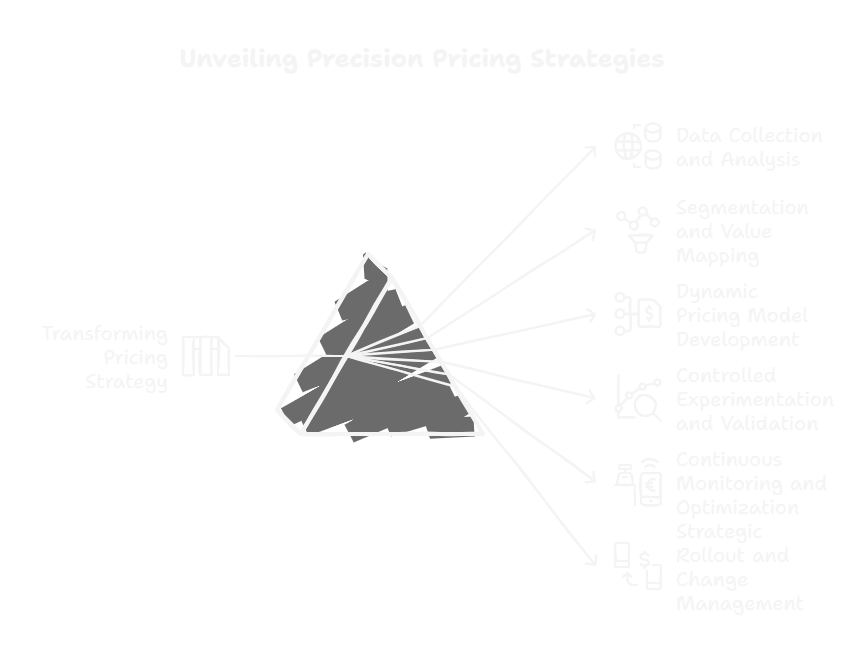
Transform pricing from a guessing game to a precision strategy with this comprehensive approach designed for B2B technology and services companies.
Step 1: Comprehensive Data Collection and Baseline Analysis
Establish a robust foundation for pricing intelligence by aggregating critical data points.
- Consolidate pricing information across product lines and customer segments
- Gather historical transaction data, including volume, margins, and customer retention
- Map competitive pricing landscape using market research and intelligence platforms
Pro Tip: Utilize advanced CRM and business intelligence tools like Salesforce Analytics or Power BI to streamline data integration and visualization.
Step 2: Segmentation and Value Mapping
Develop granular understanding of customer value perception and willingness to pay.
- Cluster customers based on purchase behavior, industry vertical, and price sensitivity
- Conduct value assessment interviews and surveys to quantify perceived product value
- Create detailed value matrices demonstrating price-to-value relationships
Pro Tip: Deploy conjoint analysis techniques to precisely measure customer value drivers and price elasticity.
Step 3: Dynamic Pricing Model Development
Design flexible pricing frameworks that adapt to market dynamics and individual customer characteristics.
- Implement algorithmic pricing models incorporating multiple variables
- Develop scenarios for different market conditions and customer segments
- Build predictive models using machine learning algorithms
Pro Tip: Leverage platforms like PROS Pricing or Vendavo for advanced pricing intelligence and automation.
Step 4: Controlled Experimentation and Validation
Test pricing strategies through structured, low-risk experimentation.
- Design A/B testing protocols for pricing variations
- Monitor customer response and financial performance metrics
- Establish statistically significant validation criteria
Pro Tip: Use experimental design principles to minimize revenue risk during pricing tests.
Step 5: Continuous Monitoring and Optimization
Implement real-time tracking and adaptive pricing mechanisms.
- Create dashboard monitoring key pricing performance indicators
- Establish automated alerts for significant market or competitive shifts
- Schedule quarterly comprehensive pricing strategy reviews
Pro Tip: Configure advanced analytics platforms to provide proactive pricing recommendations.
Step 6: Strategic Rollout and Change Management
Ensure organizational alignment and smooth pricing strategy implementation.
- Develop comprehensive communication plans for sales and customer-facing teams
- Create training programs explaining new pricing rationale
- Establish feedback loops for continuous improvement
Pro Tip: Leverage change management frameworks to minimize internal resistance to pricing transformations.
Navigating Pricing Optimization Challenges: Troubleshooting Guide
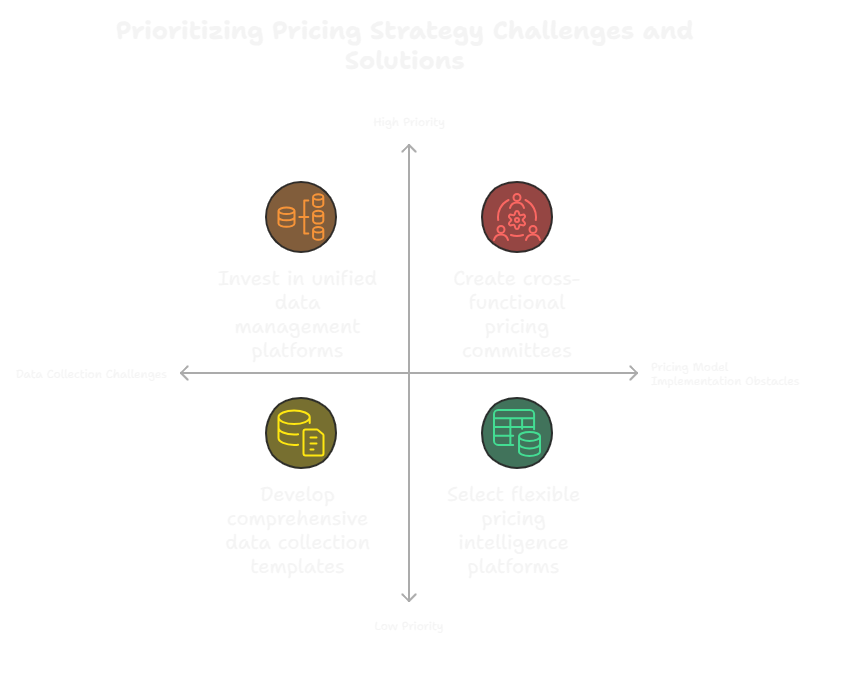
Even the most well-designed pricing strategy can encounter obstacles. This troubleshooting guide addresses critical challenges B2B executives may face during pricing optimization implementation.
Data Collection and Analysis Challenges
Common Issues:
- Incomplete or inconsistent data sources
- Data integration barriers across multiple systems
- Limited historical pricing information
Resolution Strategies:
- Invest in unified data management platforms that integrate CRM, financial, and sales systems
- Implement data standardization protocols across departments
- Develop comprehensive data collection templates with clear guidelines
Customer Segmentation Roadblocks
Potential Challenges:
- Overly broad or insufficiently defined customer segments
- Inability to capture nuanced value perception
- Limited insights into customer price sensitivity
Mitigation Approaches:
- Utilize advanced segmentation techniques beyond traditional demographic analysis
- Conduct in-depth qualitative research through structured interviews
- Develop multi-dimensional segmentation models incorporating behavioral and economic factors
Pricing Model Implementation Obstacles
Typical Barriers:
- Organizational resistance to new pricing approaches
- Technical limitations in pricing technology
- Complex pricing rule configurations
Strategic Solutions:
- Create cross-functional pricing committees to ensure organizational buy-in
- Select flexible pricing intelligence platforms with robust customization capabilities
- Develop phased implementation strategies to minimize disruption
Critical Warning: Pricing optimization is not a one-time event but a continuous strategic process. Regular monitoring, refinement, and adaptation are essential for sustained success.
Risk Mitigation Techniques
- Implement gradual pricing adjustments to minimize customer shock
- Develop transparent communication strategies explaining pricing value
- Create flexible pricing options that accommodate different customer preferences
- Establish clear performance metrics and rollback protocols if needed
Transforming Pricing Strategy: Your Roadmap to Revenue Excellence
By systematically implementing this comprehensive pricing optimization framework, B2B technology and services executives unlock a powerful mechanism for sustainable financial growth and competitive differentiation.
Tangible Business Outcomes
- Precision Revenue Generation: Develop a data-driven pricing approach that directly translates into measurable profit improvements
- Competitive Market Positioning: Create flexible pricing models that respond dynamically to market shifts and customer value perceptions
- Organizational Strategic Alignment: Build a cross-functional pricing intelligence capability that drives comprehensive business performance
- Risk-Mitigated Innovation: Implement controlled pricing experiments that minimize financial exposure while maximizing learning opportunities
Key Performance Metrics for Validation
Margin Enhancement
Measure percentage increase in overall profit margins following pricing strategy implementation
Price Sensitivity Index
Track customer retention rates and purchase volumes across different pricing scenarios
Competitive Positioning Score
Assess market share and relative pricing competitiveness within industry segments
Revenue Optimization Ratio
Calculate the incremental revenue generated per pricing strategy adjustment
Strategic pricing is not about finding the lowest or highest price, but discovering the most intelligent pricing that maximizes value for both your business and your customers.
Conclusion: Transforming Pricing Strategy into Competitive Advantage
By systematically implementing these comprehensive pricing optimization techniques, B2B technology and services organizations can transform pricing from a static operational function into a dynamic strategic lever for sustainable revenue growth. The journey of pricing optimization is not a one-time event but a continuous process of data analysis, market intelligence, and adaptive strategy refinement. As market dynamics evolve and competitive landscapes shift, successful companies will distinguish themselves by maintaining an agile, insights-driven approach to pricing that balances mathematical precision with strategic foresight. Ultimately, mastering these step-by-step methodologies empowers pricing managers and revenue executives to unlock hidden value, enhance market positioning, and drive meaningful financial performance through intelligent, data-backed pricing decisions.
By  Mario Peshev