
Best Tools for Market Research GTM: 5 Game-Changing Solutions
Discover top-tier market research tools designed for B2B professionals to drive strategic insights, competitive analysis, and effective go-to-market strategies.
Best Tools for Market Research GTM: 5 Game-Changing Solutions
Are you still manually piecing together market research insights like a complex puzzle? What if you could transform that scattered data into a strategic roadmap that drives growth and outmaneuvers competitors? Recent studies show that B2B companies leveraging advanced market research tools can accelerate their go-to-market strategies by up to 35% and reduce competitive blind spots.
For customer insights managers and market research professionals, having the right technological arsenal isn't just an advantage-it's a necessity. The landscape of market intelligence is evolving rapidly, demanding tools that can quickly synthesize complex data, uncover hidden market trends, and provide actionable insights that translate directly into competitive strategies.
In this comprehensive guide, we'll unveil 5 game-changing market research tools that are redefining how B2B organizations approach strategic planning, customer understanding, and go-to-market execution. Whether you're a startup seeking lean intelligence or an enterprise looking to optimize your research workflow, these solutions will help you navigate market complexities with unprecedented precision and confidence.
5 Best Tools for Market Research and Go-To-Market Strategy
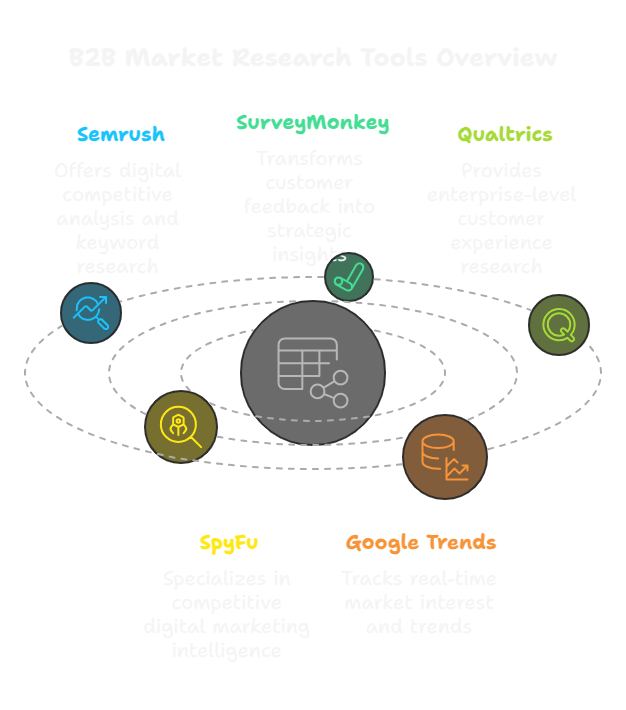
1. Semrush: Comprehensive Competitive Intelligence Platform
Semrush stands as a powerhouse for B2B market research, offering unparalleled digital competitive analysis capabilities across multiple domains.
- Conduct comprehensive keyword research
- Analyze competitor digital marketing strategies
- Track industry trends and search volume metrics
Pro Tip: Utilize Semrush's domain comparison feature to benchmark your digital presence against top competitors in real-time.
For B2B professionals seeking data-driven strategic insights, Semrush provides a holistic view of market dynamics and competitive positioning.
2. SurveyMonkey: Advanced Market Research Surveys
SurveyMonkey transforms customer feedback collection into a strategic intelligence gathering process for B2B organizations.
- Create targeted market research surveys
- Leverage advanced demographic filtering
- Generate instant statistical analysis
Pro Tip: Use conditional logic in surveys to create more nuanced, context-aware research instruments.
Direct customer insights drive more accurate market positioning and product development strategies.
3. Qualtrics: Enterprise Insights Platform
Qualtrics offers sophisticated market research capabilities designed for complex B2B research environments.
- Conduct multi-channel customer experience research
- Implement advanced statistical modeling
- Create predictive market intelligence reports
Pro Tip: Integrate Qualtrics with your CRM to create closed-loop feedback mechanisms.
Enterprise-grade research tools enable deeper understanding of complex market dynamics and customer behavior patterns.
4. SpyFu: Competitive Keyword Intelligence
SpyFu specializes in uncovering granular competitive digital marketing intelligence for strategic planning.
- Track competitor advertising strategies
- Analyze historical keyword performance
- Identify market entry opportunities
Pro Tip: Use SpyFu's historical data to understand long-term industry keyword trends.
Digital marketing intelligence provides critical insights into market positioning and competitive strategies.
5. Google Trends: Free Market Pulse Monitoring
Google Trends provides accessible, real-time market interest tracking across multiple industries and regions.
- Compare search interest across terms
- Analyze geographic market variations
- Identify emerging market trends
Pro Tip: Cross-reference Google Trends data with other research tools for comprehensive insights.
Understanding market interest fluctuations enables proactive strategic positioning.
Maximizing Market Research Tools: Strategic Implementation and Prioritization
Implementation Tips: Integrating Market Research Tools into Your Business Workflow
Successfully adopting market research tools requires a structured, strategic approach that aligns with your organization's specific objectives and capabilities.
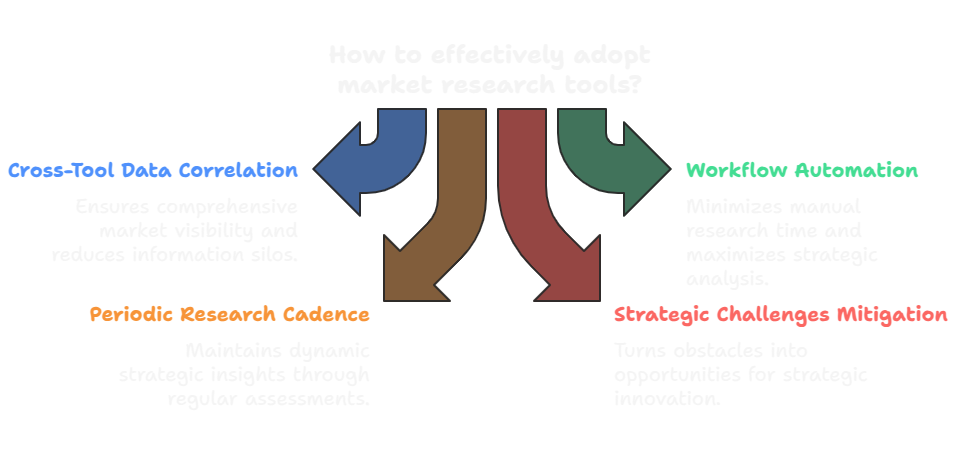
- Cross-Tool Data Correlation
Create a centralized dashboard that aggregates insights from multiple tools like Semrush, Qualtrics, and SpyFu. This approach ensures comprehensive market visibility and reduces information silos.
- Workflow Automation
Leverage API integrations between research tools and your existing CRM or project management platforms. Automate data collection and reporting to minimize manual research time and maximize strategic analysis.
- Periodic Research Cadence
Establish a consistent research schedule-weekly trend monitoring, monthly competitive analyses, and quarterly comprehensive market assessments-to maintain dynamic strategic insights.
Strategic Prioritization: Selecting the Right Market Research Tools
Choosing market research tools isn't one-size-fits-all. Your selection should reflect your organization's unique research requirements, budget constraints, and growth objectives.
- Company Size and Complexity
Startups might prioritize cost-effective tools like Google Trends and SurveyMonkey, while enterprise organizations could require comprehensive platforms like Qualtrics with advanced analytics capabilities.
- Research Objectives
Define precise research goals-competitive intelligence, customer feedback, or market trend tracking-to align tool selection with specific strategic needs.
- Budget and ROI Considerations
Evaluate tools based on potential return on investment. Calculate potential time savings, insight quality, and direct strategic value against licensing and implementation costs.
- Technical Integration
Assess each tool's compatibility with existing technology infrastructure. Prioritize solutions offering seamless integrations and minimal disruption to current workflows.
Strategic Challenges in Modern Market Research: Turning Obstacles into Opportunities
As B2B professionals dive deeper into market research tools and strategies, several critical challenges emerge that can potentially derail even the most well-intentioned research efforts. Understanding these obstacles is the first step toward developing robust, adaptable market intelligence approaches.
1. Data Overload and Insights Paralysis
Modern market research tools generate unprecedented volumes of data, often overwhelming researchers and decision-makers with complex information streams.
Strategic Mitigation Strategies:
- Implement AI-powered data filtering algorithms
- Create customized dashboards with key performance indicators (KPIs)
- Develop a hierarchical insights framework that prioritizes strategic relevance
Quick Win: Designate specific team members as "insight translators" who can convert raw data into actionable strategic narratives.
2. Tool Integration and Interoperability Complexities
Different market research platforms often operate in technological silos, creating friction in data aggregation and holistic analysis.
Strategic Integration Approaches:
- Invest in middleware solutions that enable cross-platform data synchronization
- Prioritize tools with robust API capabilities
- Develop standardized data ingestion protocols within your organization
Quick Win: Conduct a quarterly audit of your current tool ecosystem to identify and resolve integration bottlenecks.
3. Skill Gap and Research Methodology Limitations
Many organizations struggle with the technical expertise required to leverage advanced market research tools effectively.
Capability Development Strategies:
- Implement continuous learning programs focused on market research technologies
- Create cross-functional research teams with diverse skill sets
- Establish mentorship programs connecting experienced researchers with emerging talent
Quick Win: Allocate monthly training budgets for team members to acquire certifications in specific research methodologies and tools.
Transforming Challenges into Competitive Advantages
Successfully navigating these challenges requires a proactive, systematic approach that views research limitations not as roadblocks, but as opportunities for strategic innovation and differentiation.
Navigating the Future of Market Research: Strategic Tool Selection
As market research professionals and customer insights managers continue to navigate increasingly complex B2B landscapes, selecting the right GTM research tools becomes pivotal for maintaining competitive advantage. The evolving ecosystem of market intelligence platforms demands a strategic approach that balances comprehensive data collection, advanced analytics, and actionable insights. By carefully evaluating tools across dimensions of data depth, integration capabilities, predictive analytics, and real-time intelligence, professionals can transform raw information into strategic narratives that drive informed decision-making. The future of successful go-to-market strategies lies not just in possessing data, but in leveraging intelligent, adaptive tools that can anticipate market shifts, decode competitive dynamics, and provide nuanced understanding of emerging customer needs. Ultimately, the most effective market research toolkit is one that seamlessly combines technological sophistication with strategic flexibility, empowering organizations to not just react to market changes, but proactively shape their competitive positioning.
By  Mario Peshev